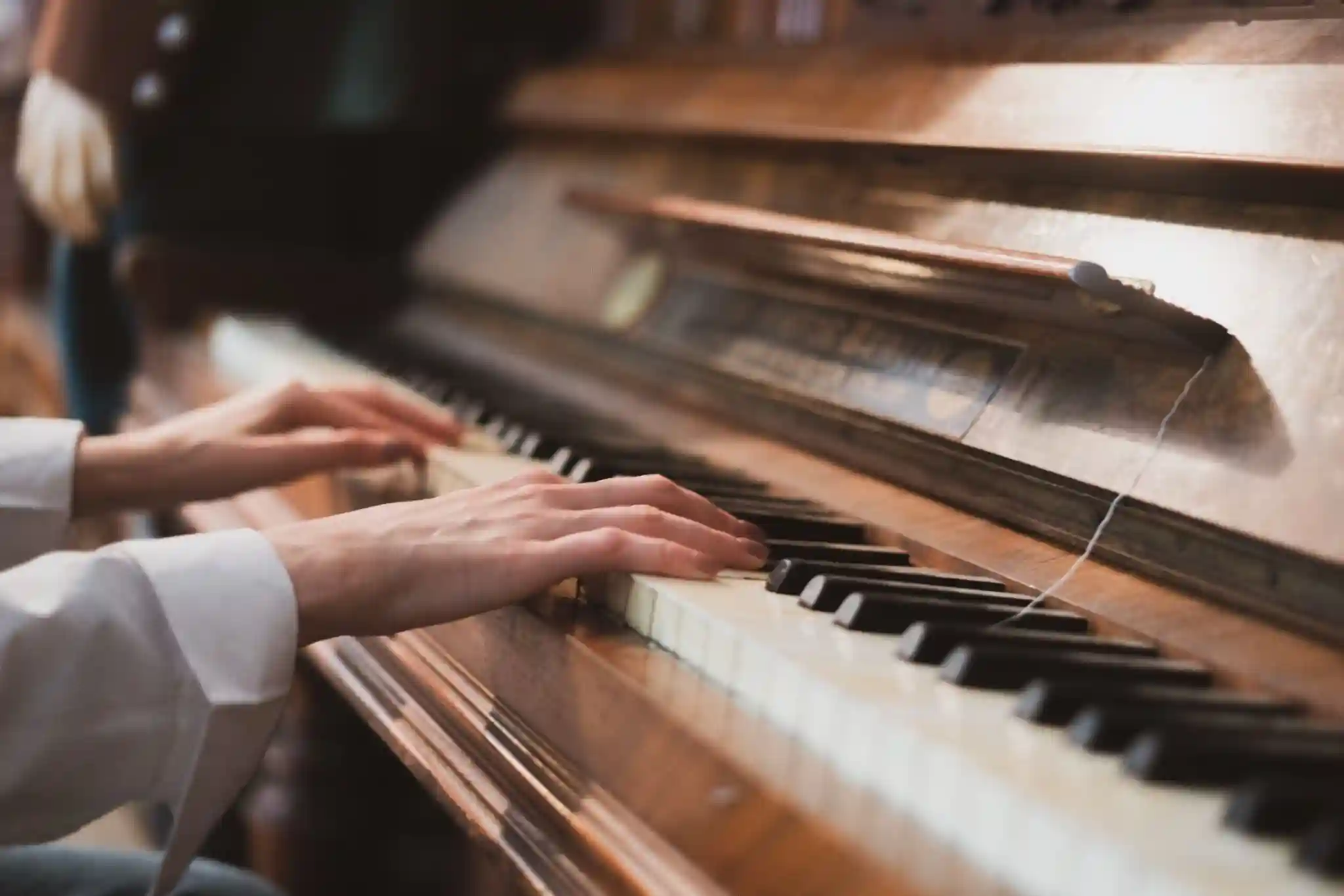
The piano is one of the most expressive instruments ever created. Its history reflects centuries of musical evolution, cultural change, and artistic experimentation. To truly understand its development, you need to explore the classical piano eras that shaped how the instrument is played and appreciated today. Each era introduced new techniques, emotional depth, and compositional styles. From early keyboard instruments to modern concert halls, the piano has continuously evolved. This guide breaks down the key historical periods that defined piano music and explains how each one contributed to its rich legacy.
Early keyboard origins before the classical piano
Before the modern piano existed, composers worked with earlier keyboard instruments such as the harpsichord and clavichord. These instruments laid the foundation for piano music but had significant limitations.
The harpsichord produced sound by plucking strings, which meant it could not vary volume based on touch. This made expressive dynamics nearly impossible. The clavichord allowed slightly more control, but its soft volume limited performance settings.
These limitations inspired instrument makers to search for something more expressive. This need eventually led to the development of the fortepiano, the direct predecessor of the modern piano. Understanding this early stage is essential when studying classical piano eras, because it shows why the piano became such a revolutionary instrument in music history.
Baroque era and the foundation of keyboard composition
The Baroque era (roughly 1600–1750) was a crucial period for keyboard music. Even though the modern piano was not yet fully developed, composers wrote extensively for harpsichord and organ.
Counterpoint and structured musical thinking
Baroque music focused heavily on counterpoint. This means multiple independent musical lines played at the same time. This structured approach trained composers to think in layers, which later influenced piano composition.
Influence of composers like Bach and Scarlatti
Composers such as Johann Sebastian Bach and Domenico Scarlatti played a major role in shaping keyboard music. Bach’s works emphasized complexity and structure, while Scarlatti introduced playful, technical passages that expanded keyboard possibilities.
Technical development of finger independence
Baroque compositions required precise finger control. This helped develop early piano technique, especially in terms of hand independence. These skills remain essential for pianists today.
The Baroque era laid the intellectual groundwork for all later classical piano eras, even before the piano fully existed.
Classical era and the rise of piano clarity and form
The Classical era (roughly 1750–1820) marked the true beginning of piano development as we recognize it today. The fortepiano allowed composers to explore dynamic expression for the first time.
Music during this period focused on clarity, balance, and structured form. Unlike the complexity of Baroque counterpoint, Classical compositions emphasized melody with harmonic support.
The sonata form became a central structure in piano music. It introduced logical progression and thematic development, which helped shape Western classical composition.
Composers such as Mozart, Haydn, and early Beethoven wrote works that showcased the expressive potential of the piano. This era transformed the instrument from a novelty into a central part of musical culture. Among all classical piano eras, the Classical period established the foundation for modern piano technique and performance standards.
Early Romantic era and the emotional expansion of piano music
The Romantic era (roughly 1820–1900) dramatically changed the role of the piano. Music became more emotional, expressive, and personal. Composers used the piano to communicate deep feelings rather than just structured ideas.
Expressive freedom and individualism
Romantic composers emphasized individuality. Music became a reflection of personal emotion. This allowed for greater freedom in rhythm, phrasing, and dynamics.
Virtuosity and technical advancement
Piano technique advanced rapidly during this period. Composers like Frédéric Chopin and Franz Liszt wrote highly technical works that required exceptional skill. These pieces pushed the limits of what pianists could physically perform.
Influence of composers like Chopin and Liszt
Chopin focused on poetic expression and delicate nuance. Liszt emphasized dramatic virtuosity and performance spectacle. Together, they expanded the emotional and technical boundaries of piano music.
The Romantic era is one of the most influential classical piano eras, shaping how the instrument is perceived as an emotional storytelling tool.
Late Romantic era and orchestral piano writing
As the Romantic era progressed, piano music became even more complex and dramatic. Composers began treating the piano almost like a full orchestra.
Harmonic language expanded significantly. Chords became richer, and emotional intensity increased. Music often told stories or depicted scenes, making it more programmatic in nature.
Large-scale piano compositions became common, including concert études, sonatas, and virtuosic concert works. The piano was no longer just an instrument for salons but a centerpiece of concert halls.
Composers like Sergei Rachmaninoff and Johannes Brahms contributed heavily to this development. Their works combined technical difficulty with emotional depth, marking the peak of Romantic piano expression.
Impressionist era and color-based piano expression
The Impressionist era introduced a completely different approach to piano music. Instead of focusing on structure or emotional intensity, composers focused on atmosphere and tone color.
Use of tone color and atmosphere
Piano music became more about creating soundscapes than telling stories. Soft dynamics, pedal effects, and fluid rhythms created a dreamlike quality.
Influence of Debussy and Ravel
Claude Debussy and Maurice Ravel were key figures in this movement. Debussy’s works often used non-traditional scales and harmonies. Ravel focused on precision and texture.
Departure from traditional harmonic structure
Impressionist composers broke away from traditional chord progressions. This created more ambiguity and emotional subtlety in piano music.
This era added a new dimension to classical piano eras, focusing on sound texture rather than structural development.
Modern and contemporary piano eras
The modern era brought experimentation and diversity to piano music. Composers explored new rhythms, harmonies, and performance techniques.
Minimalism became a major movement, with repetitive structures and gradual changes. Composers like Philip Glass and Steve Reich used simplicity to create hypnotic effects.
At the same time, avant-garde composers experimented with unconventional techniques such as prepared piano, where objects are placed inside the instrument to alter sound.
Global influences also became more prominent. Jazz, folk, and non-Western musical traditions began influencing piano compositions.
This era reflects the ongoing evolution of classical piano eras, showing that piano music continues to adapt and expand.
Evolution of piano technique across eras
Piano technique has evolved significantly over time, shaped by the demands of each musical era.
From finger precision to full-body performance
Early piano playing focused mainly on finger control. Modern performance requires full-body coordination, including posture, arm weight, and movement.
Pedal usage and expressive control
The development of the sustain pedal changed piano music dramatically. It allowed for richer sound blending and emotional expression.
Technical demands in modern repertoire
Modern compositions often require advanced techniques, including rapid passages, complex rhythms, and extended hand movements.
This technical evolution reflects the increasing complexity of classical piano eras and their influence on performance standards.
How classical piano eras influence today’s musicians
Modern pianists still rely heavily on techniques and styles developed in earlier eras. Music education often includes works from all major historical periods.
Students learn Bach to develop finger independence, Mozart for clarity, Chopin for expression, and Debussy for tonal color. Each era teaches different skills.
Professional performers also interpret classical works based on historical understanding. This means knowledge of classical piano eras is essential for authentic performance.
Even contemporary composers continue to draw inspiration from these traditions, blending historical styles with modern innovation.
FAQs
1. What are classical piano eras?
They are historical periods in music that shaped piano development, including Baroque, Classical, Romantic, Impressionist, and modern eras.
2. Which era had the most influence on piano music?
The Romantic era had a major influence due to its emotional depth and technical expansion of piano performance.
3. How did the piano evolve over time?
It evolved from early keyboard instruments like the harpsichord into a dynamic instrument capable of expressive volume and tone control.
4. Why is Bach important in piano history?
Bach’s Baroque compositions developed counterpoint and finger independence, which are essential skills for piano technique today.
5. Do modern pianists still study classical eras?
Yes, all major piano training includes works from different eras to build technique, expression, and stylistic understanding.